
Leap and Spinning
Two graphic novels about lesbians jumping and twirling

I got Leap from the Queer Liberation Library on Libby the other day after months of waiting, and I loved it!
But as I was reading, a question formed in my head: why doesn’t it remind me of Spinning?
Both graphic novels are about lesbians in a feminine performance art/sport in conservative areas, with two-color limited palettes including very similar shades of dark purple. But Spinning feels like a completely different kind of story. Why is that?
A key difference is that Spinning is a memoir, and Leap is fiction.
Narrativizing your life is hard. Unless you lead a very particular kind of life and select a specific segment of it to turn into a book, it’s never going to have the clear forward progression of a fictional story created to have goals and stakes and a climax. In fiction, characters can do what makes the best story. In real life, they often don’t. Leap, which has two main plotlines following two roommates at a dance academy in Bucharest, has big climactic resolutions for each of them.
Spinning feels more atmospheric and less propulsive. The events depicted in it aren’t always perfectly satisfying, because that’s the nature of reality. But another part of it is that, because it’s a memoir, it’s being narrated in past tense, and the sense of Tillie’s present self looking back on her past creates more distance from the events on the page. We know everything will be okay because she’s telling us the story now.
Another difference between Leap and Spinning is the narrative focus. Spinning, being from Tillie’s perspective, has a lot of narration from Tillie that feels deeply internal, without a lot of attention or development paid to anyone else. Which makes sense because it’s kind of awkward to write about your friends and family as if you know what they’re thinking. Leap has very little narration, but a lot of dialogue, and the characters tend to come to conclusions through conversations with each other rather than by thinking in silence. Leap also has two protagonists rather than one, and we tend to, well, leap between Ana and Sara’s points of view.
And of course, the art
When I think about Spinning (and Tillie’s1 work generally), I think about freeform, abstract kind of montagey pages without a lot of panel borders, but looking at Spinning again that’s not really the case for most of the book. While she does have occasional splash pages with heavy spot blacks, most of the pages follow a rigid six-panel grid.
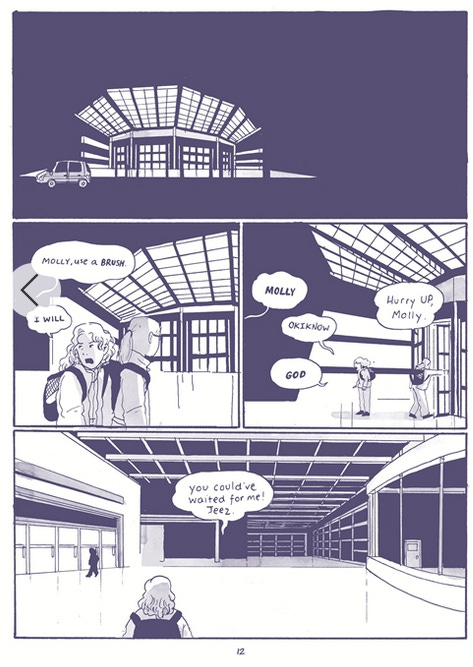
The repetition of the grid creates a sense of rhythm and structure. There’s a lot of repeating panels and moment-to-moment transitions that slow time down without changing the shape of the panel layout.
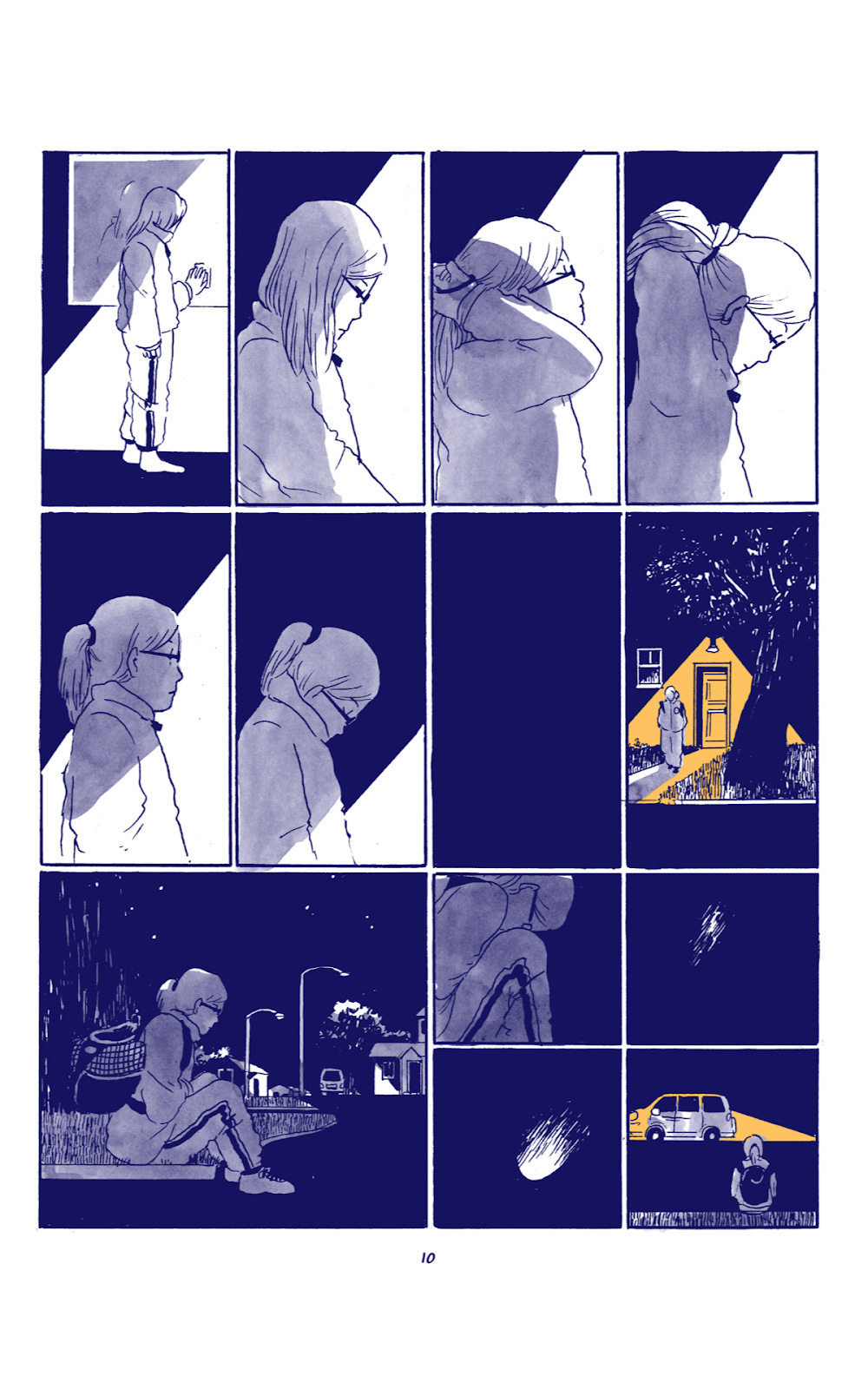
All of the panels in Spinning are square or rectangular, no triangles or weird shapes, rarely even cut-out or cut-in effects where a character overlaps the panel borders.
Leap is less rigid with its panel layouts, but it’s more focused on depicting the characters talking, acting, and reacting, than the silences and empty spaces in between. Lot less spot blacks, that’s for sure.
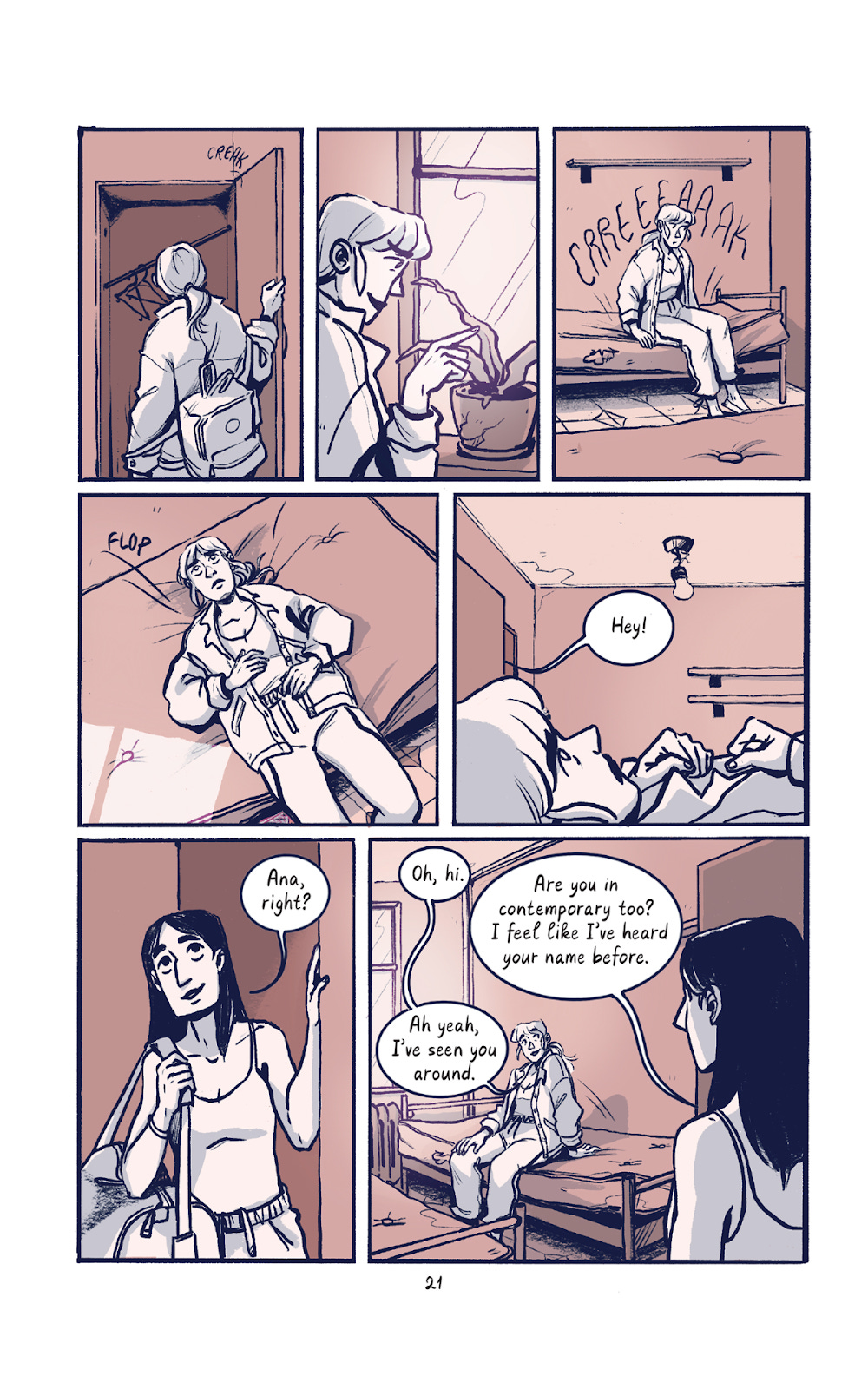
Simina treats panel borders with much more flexibility than Tillie, having balloons, characters, and other elements of the page overlap them fairly often to help the narrative flow.
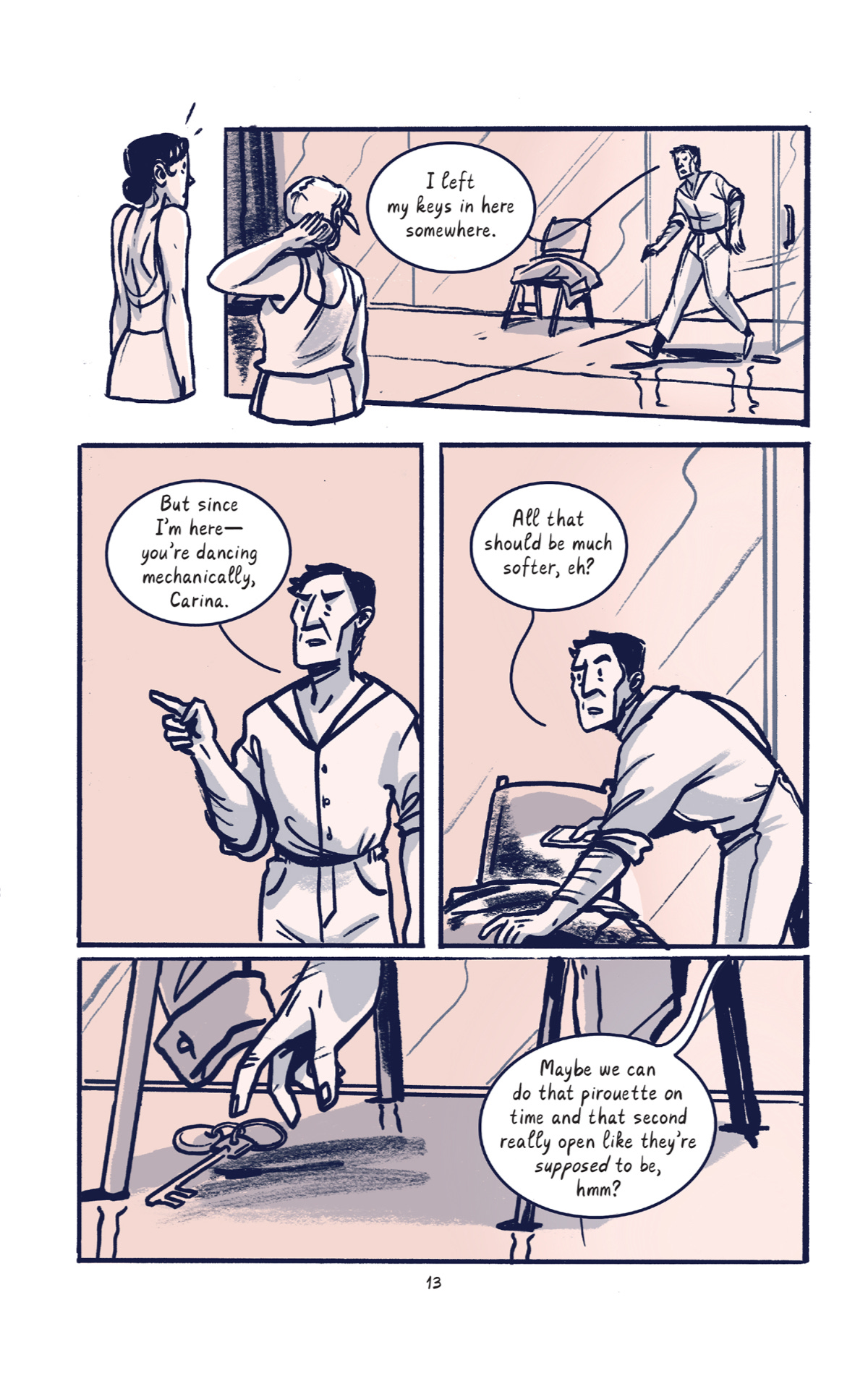
I think the overall color gamut (the relative quantity of each color used on the page) is a key difference as well. Spinning uses a lot of spot blacks (er. Spot dark purples I guess lol), while Leap is overall more reliant on the dusty rose hue it uses, and mostly saves the dark purples for some characters’ hair. This leads to Leap feeling brighter and Spinning feeling moodier overall, even though Spinning has light moments and Leap has darker moments too.
On a subjective note, I do think Spinning is… prettier. The way Tillie draws people is really appealing, and she really gets the most out of that grid and her spot blacks and accent yellows. But I also like how detailed the environments are in Leap, and the way Simina draws the dance sequences makes them feel really alive. I also found myself sucked into the story in a way that didn’t happen when I read Spinning for the first time.
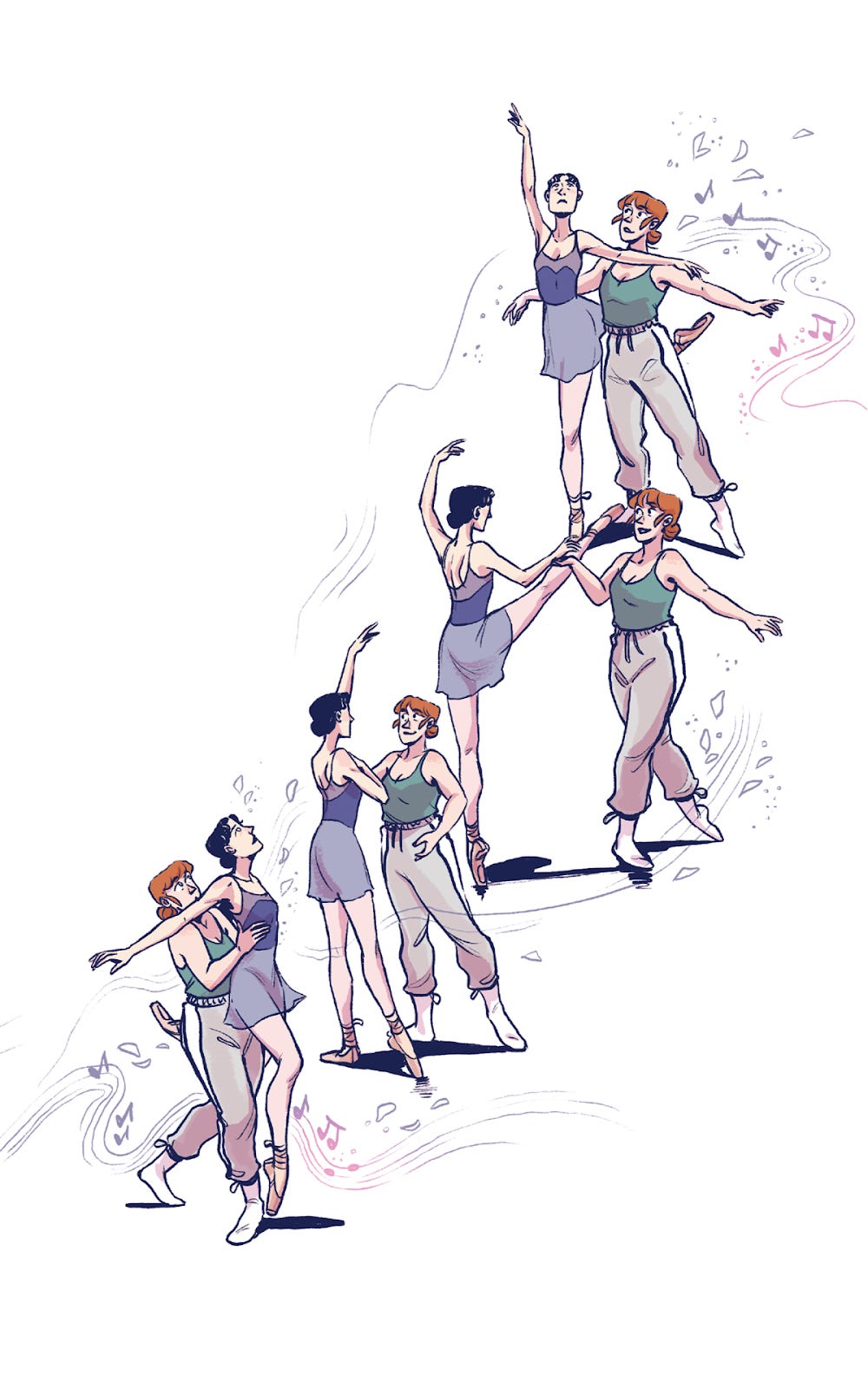
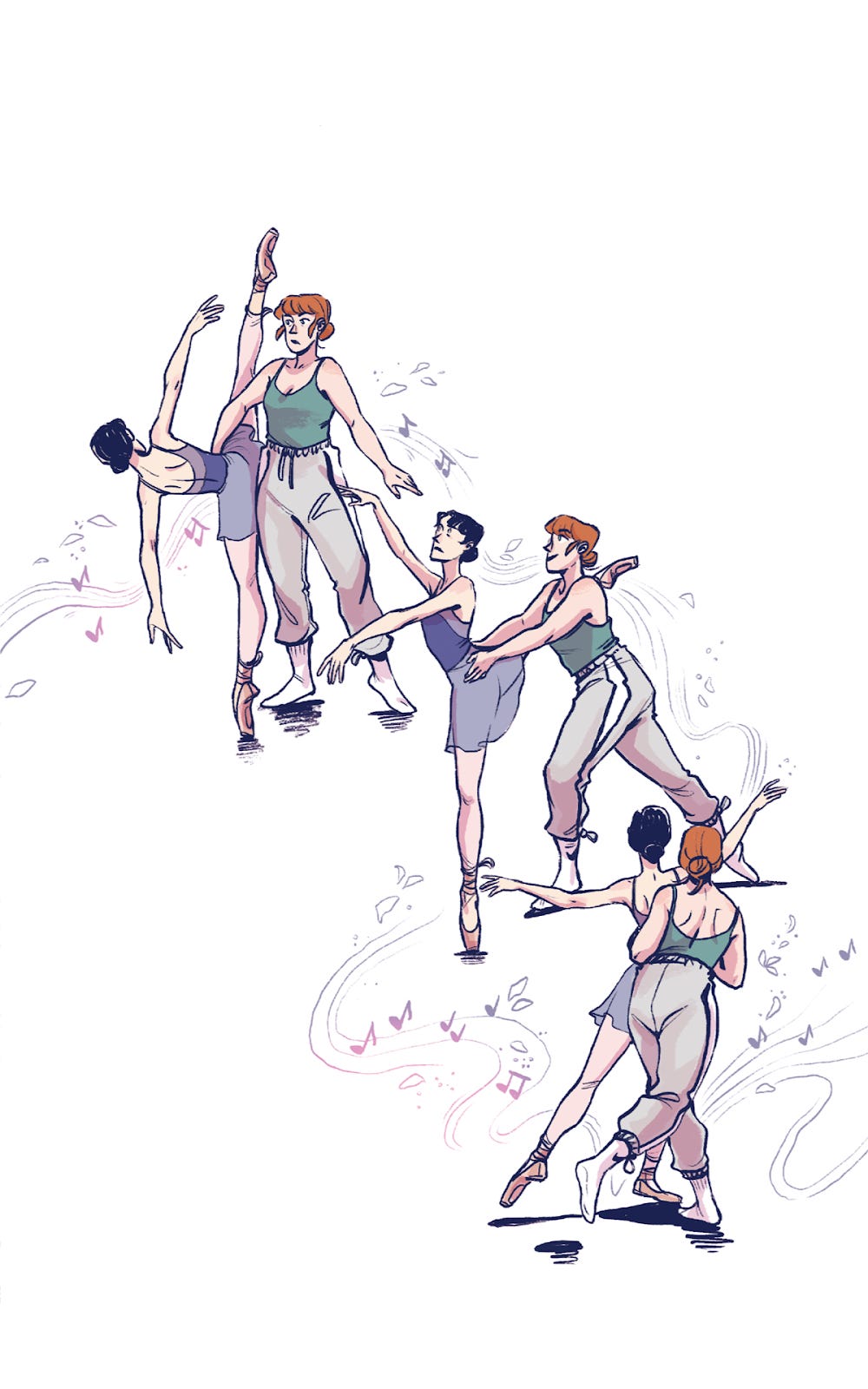
Both comics deal with serious subject matter, but they depict it in different ways. And I would genuinely recommend them both, because they’re good in different ways, and I think that’s interesting.
I know Tillie irl so I feel weird lastnaming her and then I just decided to first name Simina for consistency even though that’s not Correct and also I don’t know them like that lol